23 June 2013

Discover Romania - Transylvania


Surrounded by the Carpathian Mountains, Transylvania- Terra Ultrasilvana or “the land beyond the forests” - is the territory where the Dacian state, ruled by King Burebista, experienced the most prosperous period in the history of the Geto-Dacians and, at the same time, by its organisation and expansion, it laid the foundation of the future Romanian territories.

Issued 15. March 2013 the stamps show as follows:

Fortified Church from Viscri (Brasov County)


turistderomania.ro
Guest House from Valea Zalanului (Covasna County)


Landscape from Hosman (Sibiu County)


Saint Mihail Church from Cluj-Napoca (Cluj County)


Thanks to Viridian who is keeping up the good job with Sunday Stamps. I am glad I could take part this time too. Do you want to see more churches and castles? Take a look at her Blog.

Live healthy

Romfilatelia introduces into circulation the postage stamps issueLive healthy!, thus adding a new set of stamps to the topic initiated in 2012, which suggestively illustrates the natural resources that should lie at the basis of a healthy nutrition, such as: honey, walnuts, peanuts, wild berries (raspberries, blueberries and blackberries) and cinnamon.


Looks pretty nice, isn´t it? It is a perfect sheet for food-stamp-lovers. And I love honey too. 
I don´t have to do a research for this one, everybody is already familiar with nuts, berries and cinnamon.
Issued 13.06.2013

24 May 2013

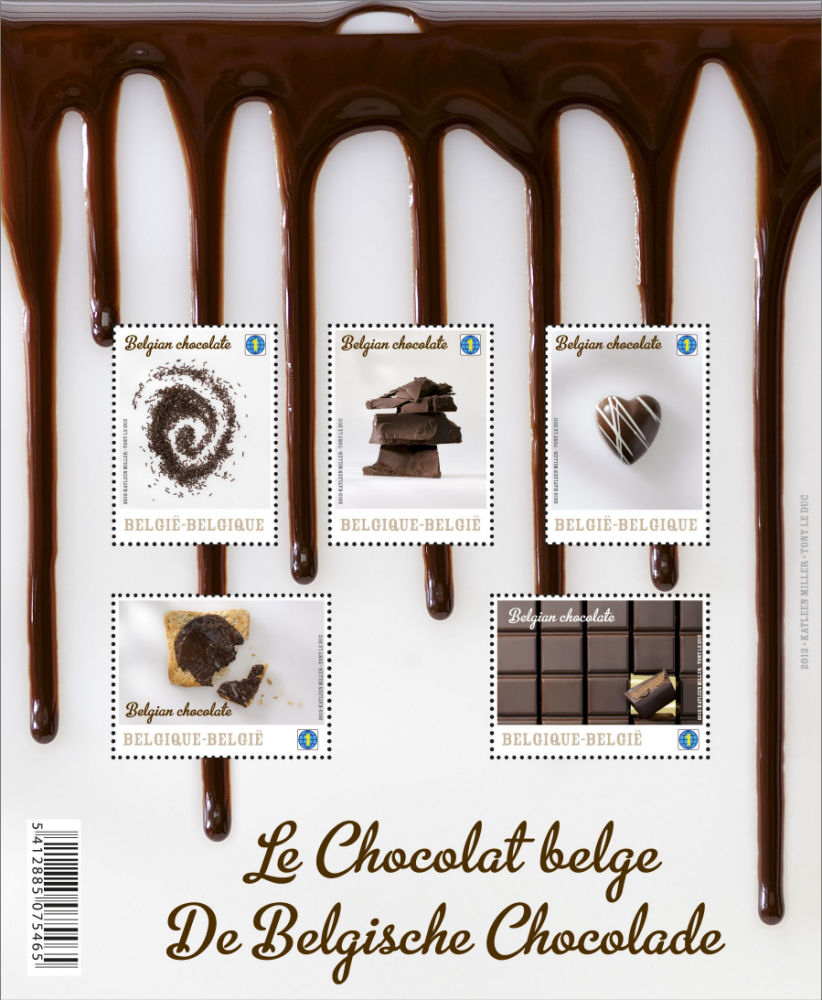
Chocolate postage stamps

Belgium has released a set of special stamps that smell and taste like chocolate!
Bpost, the Belgian post office, has printed more than 500,000 delicious, lip-smacking stamps to celebrate the country's famous chocolatiers. The delectable stamps are printed on special paper "imbued with the aroma of cocoa" and coated in a special coat that looks and smells like chocolate. 


Each stamp features a chocolate treat so you’re given a visual representation of what you’re tasting – it would make me send more letters anyway.

Interesting way of thinking about stamps. I have some similar stamps from Ukraine, they smell like fruits. But here, they say it also tastes like Chocolate. That could be good for those who are on a diet :) low calories chocolate! I think it´s funny.

The series of five stamps cost €6.20 and they were released on March 25th.

11 May 2013

Children Games 1960

For today's theme at Viridian´s Sunday Stamps I have chosen some old stamps from Romania.
They represent quite nicely the way children used to play in small villages: skating on frozen lakes, swimming in summer, playing rounders or sleighing.
I find this set a nice one, especially these days when children don´t play that much anymore outside, it´s good to remind their parents that there are much healthier ways to spend the day than watching TV or playing games on computer. It´s up to each of us to teach them something from our childhood.
So here are the stamps:


They are not that accurate as today´s stamps, but let´s don´t forget they were printed in 15 Oktober 1960 :)
What did you used to play as a child?


26 April 2013

WOMEN AND INVENTICS

On the occasion of celebrating the World Intellectual Property Dayon the 26th of April, Romfilatelia introduces into circulation a postage stamps issue dedicated to this event.

Established in 1967, the World Intellectual Property Organisation (WIPO), one of the 15 specialised agencies of the United Nations (UN), has as main responsibilities to develop a world wide intellectual property system able to reward creativity, to boost innovation and to contribute to the economic development.

Conveying a special approach to this theme, Romfilatelia illustrates three female personalities and their inventions on the postage stamps, under the name Women and Inventics.

Stefania Maracineanu (1882-1944), famous in the scientific world as the physicist who discover artificial radioactivity in 1924 is illustrated on the postage stamp with the face value of Lei 1.00. Just found a book about her in Google. Take a look.

Josephine Cochrane (1839-1913), born in the USA - State of Illinois, and illustrated on the postage stamp with the face value of Lei 3.30, was the inventor of the dish-washing machine. More about her here.

The postage stamp with the face value of Lei 9.10 illustrates Grace Murray Hopper (1906-1992), pioneer in the field of informatics, who developed the first compiler for a computer programming language and created one of the first modern computer programming languages - COBOL. Read about her.


Great Women, great inventions.

18 March 2013

Crowns of the Kings of Romania

The postage stamps issue “Crowns of the Kings of Romania” reminds to former generations and presents to new ones the symbols of the Romanian royalty on the background of the great events in the history of our people which marked the State Independence and recognition of Romania as a sovereign country and a fundamental piece of the state structure that has still been forming the European community.


We can see on these stamps the Steel Crown of King Carol I, symbol of Independece:

The Crown of Queen Elisabeta 


and the Crown of Queen Maria. 


See specific details about these here.


TitleCrowns of the Kings of Romania
Date of Issue: 28 February 2013
Country: Romania
Denominations: 3L30, 4L30, 14L50
Sourcehttp://www.romfilatelia.ro

21 February 2013

Sunday Stamps: Astronomy

Just looking around and found this special postcard from Ulrich. So I decided to write this post for Viridian´s Sunday Stamps.

Here the stamp itself, a bit bigger. It´s beautiful. 
The Horse-head Nebula is part of our Milky Way. Though the mist in the form of a horse's head is a deep dark cloud that absorbs all light, you can see it with a telescope - a silhouette in front of the glowing Orion Nebula.

And here the whole set:

A special feature is the tenant of the 55-cent stamps of the solar system in a sheet. The sun and the Milky Way combine both brands. The four special stamps were designed by the graphic artist Hans Werner Schmidt. Year of print 2011. 

Which one do you prefer?

04 March 2012

125 Jahre Schmalspurbahnen im Harz


Because today Viridian´s theme is means of transportation, I couldn ´t stop myself of presenting a railway stamp. This time from Germany.

The Harz Narrow Gauge Railways (German: Harzer Schmalspurbahnen) or HSB is a network of 1,000 mm gauge railways in the Harz mountains, in central Germany. It connects the principal towns of Wernigerode, Nordhausen and Quedlinburg and several smaller towns in the area with about 140 kilometres of track, much of which is steeply graded and picturesque. The most popular destination on the network is the Brocken, an old Soviet listening post on top of the tallest peak in the Harz mountains, accessed by a spiral railway line, the Brocken Railway. The railway is notable for running a significant number of its trains with steam haulage, mostly employing 1950s vintage 2-10-2 tank locomotives, hauling traditional open-platform bogie carriages. The network is currently operated by the Harzer Schmalspurbahnen GmbH, whose members are chiefly the various local authorities whose territories it serves.
Particularly precious are the historic steam locomotives. So today two Mallets made ​​before 1897 are in use. During the course they pass over almost 400 bridges, water culverts and a tunnel.
Find out more about this anniversary here: 
http://www.hsb-wr.de/hsb_barrierefrei/hsb/hsb_e.htm 

Title: 125 Jahre Schmalspurbahnen im Harz

Date of Issue: 9 Februar 2012
Country: Germany
Denominations: 0,45 euro
Source: https://philatelie.deutschepost.de

26 February 2012

My most unusual stamp

Lunar New Year - embroidered Year of the Dragon stamp issued by Micronesia.


I never knew a stamp can look like this too. It´s more a self adhesive piece of cloth. Quite weird. What do you think, is this really a stamp?

I have won it by joining the Facebook page of Cyberstamps.

Please visit Viridian´s Suday Stamps for more interesting stories on stamps.

18 February 2012

Dog stamps from Germany

Good morning to you all stamp collectors. Today at Viridian´s Sunday Stamps I have chosen to display my dogs. I don´t really have much on this theme. So here it is:


This fine set of five welfare stamps was issued on 8th February 1996, and is devoted to pedigree dogs. A pedigree is a dog's family tree. It lists the registered names of the dog's parents, grandparents, great-grandparents (etc.) of the dog - most printed pedigrees go to 4 or 5 generations. Other information may or may not be included, such as date of birth, color, registration number, call name, or titles earned. Titles earned are almost always included - Championship, Sire or Dam of Merit, Obedience or Agility titles.

Represented here are 

11 February 2012

Love stamps for Valentine´s day


Today´s theme proposed by Viridian is LOVE stamps. I had to search a little bit, but I found these ones:

Slovenia (28.01.2011) - Love entry in a Journal


Slovenia (30.01.2009) - Kiss


Finland (1999) - Valentine (it´s a set of 2 values, I only have one of them)


Romania (2002) - Valentine´s day (2 stamps, only one I have)


 I think the Finland stamps are the most unusual illustration for Love. What do you think?


10 February 2012

Flora of Romania (II)

The postage stamps issue “Flora of Romania II” completes the project achieved by Romfilatelia on an innovative illustrative thematic. The originality of this project consists in joining the image of the flower with the one of the being, from whose appearance the plant receives its popular name.
The eye of a snake
The Alpine Forget-me-not (Eritrichium nanum (L.) Schrad. ex Gaudin Boraginaceae family) is illustrated on the postage stamp with the face value of 0.50 lei. It is a herbaceous plant with small leaves up to 4.5 mm wide, covered with silky white hairs. Its flowers are blue, rarely white, and have a pleasant smell.
Turkey´s bow
The Love-lies-bleeding (Amaranthus caudatus L. – Amaranthaceae family), an annual plant that can reach a height of 2 m is illustrated on the postage stamp with the face value of 0.60 lei. The plant blossoms from July to October. At the beginning, its inflorescences are long and thin and, as the summer passes, they become thick and red. The species originates in South America and, inRomania it is cultivated for ornamental purposes.

the lamb´s tongue
The Starflower (Borago officinalis L. – Boraginaceae family), an annual plant having a high, thick, arborescent stalk, covered by hairs, is illustrated on the postage stamp with the face value of 1.60 lei. It can reach heights of 30-60 cm. Its leaves have round or little denticulate edges. First, the corolla is star-shaped red, then turning blue. The starflower is a melliferous plant, originating from the Mediterranean area, cultivated and turned wild inRomania. The plant is used in human and veterinary medicine.
Crab´s tail
The Silverweed (Potentilla anserina L. – Rosaceae family), a herbaceous plant, 15-50 cm high, is illustrated on the postage stamp with the face value of 2.00 lei. Its flowers are yellow. It can be found in plain areas and at altitudes up to 1,300-1,500 m, in moist, often ruderalised meadows, but also on the banks of lakes and rivers. It blossoms from May through August. The plant is used in human and veterinary medicine.


Title: Flora of Romania (II)
Date of Issue: 19 January 2012
Country: Romania
Denominations: 50B, 60B, 1L60, 2L
Source: http://www.romfilatelia.ro

26 January 2012

Flora of Romania (I)

Flora, a subject highly appreciated by the philately lovers, is approached by Romfilatelia in the postage stamps issue Flora of Romania (I), released in a new illustrative manner, joining the image of the flower and the name of the beings from which their popular name derives.

"the bear´s honey"
The Common Lungwort (Pulmonaria officinalis L. – Boraginaceae family) is illustrated on the postage stamp with the face value of 1.00 lei. It is a perennial plant, spread in our country in deciduous forests, in grasslands and at the border sides of the forests. The strain is 10-30 cm high and the middle stalk leaves are oval-elongated through elliptical. First, the flowers are red and then turn into purple-bluish. The plant blossoms in March through May.

"the rooster´s foot"

The Creeping Buttercup (Ranunculus repens L. – Ranunculaceae family), a perennial plant, very common in the moist areas of mountain meadows and in the marshy areas or on the river banks, is illustrated on the postage stamp with the face value of 1.20 lei. Its root is ramified and thick and it looks like a cock spur. The plant is 30-60 cm high and blossoms in May through August and its flowers are yellow. It is also known as a“curing flower”, being used in human and veterinary medicine.


"Lion´s mouth"
The Common Snapdragon (Antirrhinum majus L. – Scrophulariaceae family), a plant with flowers in different colours (white, pink, yellow, orange, red or purple), is illustrated on the postage stamp with the face value of 3.30 lei. The name of this perennial plant derives from the resemblance of the flower with a dragon muzzle, which snaps open when pressing on its sides. It originates from the Mediterranean area and blossoms in June through August. The species is cultivated in Romania.

"rabbit´s watercress"
The Common Wood-Sorrel (Oxalis acetosella L. – Oxalidaceae family) is illustrated on the postage stamp with the face value of 3.60 lei. The plant covers the ground in deciduous and coniferous forests, as a light green carpet islanded with white flowers. This plant has curative capacities and is used in the pharmaceutical field (to stimulate digestion and to refortify the body).
"ox-eye"
The China Aster (Callistephus chinensis (L.) Nees – Asteraceae family) is illustrated on the postage stamp with the face value of 4.70 lei. The name of the plant derives from the Greek words “kalós” (beautiful) and “stéphos” (crown). It originates from Eastern India,China and Japan and is very popular inRomania, being cultivated for ornamental purposes.

"swallow´s dress"
The Field Bindweed (Convolvulus arvensis L. – Convolvulaceae family), a cosmopolite plant, is illustrated on the postage stamp with the face value of 7.60 lei. Whether climbing or creeping, its length can reach up to two meters. The leaves have a petiole and the lamina is cordate or hastate. The trumpet-shaped flowers have a 1-2.5 cm diameter and are white or light pink.

Since there is no possibility of ordering stamps directly from Romfilatelia, for those who are living outside Romania, if there is anybody interested in these stamps please let me know. I can help you in getting them at face value + postal charges.

Title: Flora of Romania (I)
Date of Issue: 17 January 2012
Country: Romania
Denominations: 1L, 1,20L, 3,30L, 3,60L, 4,70L , 7,60L
Sourcehttp://www.romfilatelia.ro

14 January 2012

Korean Food Series

I am back today with a post for Viridian´s Blog (to see other posts plaese click on the link you find left Sunday Stamps), with food on stamps. I kind of love this theme, it has became one of my favorites. It´s a different way of learning about a country´s culture. As they say: you are what you eat, isn´t it?

So we have in our menu for today Korean food, as follows: neobiani (broiled beef), bindaetteok (pan-fried ground mung bean), jeongol (casserole), and hwajeon (pan-fried rice cake with flower petals). These traditional food plates demonstrate the cooking skills and unique flavors of Korean ancestors.


Neobiani a favorite dish of royal families in Korea, is the boiled lean meat of short ribs or sirloin, which is considered one of the most delicious and tender cuts of beef. The thinly sliced meat is marinated in a mixture of soybean sauce, powdered sesame, salt, sesame oil, Welsh onion, garlic and other seasonings. The name neobiani is derived from the word neobut, which describes how the beef is sliced into large, thin pieces. Maejeok is a similar food that records reveal existed in ancient times.


Bindaetteok first appeared as bin jatteok in Eumsikdimibang (a cooking encyclopedia) written in the 1670s by Mrs.Jang, the wife of a public officer. The dish was originally prepared by frying a mixture of water-soaked and ground mung bean, pork, bracken, mung bean sprouts, and cabbage kimchi on a cauldron lid. Bindaetteok is among the foods usually served during traditional holidays and on other special occasions.


Jeongol is prepared by pouring beef stock into a casserole pan and arranging vegetables and meat in it. It is boiled in a casserole on top of a burner in the middle of the table, and eaten by those sitting around it. Similar to sinseollo, jeongol is easy to cook and is favored by common people. Jeongol is made in a pot resembling a helmet because the dish dates back to ancient times when soldiers supposedly boiled fish or meat in their own helms during combat because they didn`t have any cookware.


Hwajeon is prepared by kneading glutinous rice flour with hot water, then mixing in flowers or arranging them on top before they are pan-fried. Azaleas are used in spring, on the third day of the third lunar month, yellow roses in summer, and chrysanthemums in autumn, on the ninth day of the ninth lunar month. Since flowers are rare during the winter, other ingredients such as jujube are used instead, incorporating different flavors for the different seasonings.

Title: Korean Food Series (5th)
Date of Issue: 15 June 2005
Country: Korea
Denominations: 4 x 220 won
Source:
 http://www.koreastamp.go.kr/

10 January 2012

Germany 2012 New Issues

Happy New year to everyone!

In this post I will insert images of recent stamp issues from Germany. By clicking on the link below the picture you will be redirected to a short description of the items, similar to what I have done before on this blog. Enjoy!
January 2, 2012 Nationalpark Jasmund